Home/Posts/Leadership
31 Jul 2020

I Didn’t Sign Up For This!

By |2020-08-05T09:22:23-07:00July 31st, 2020|Leadership|0 Comments

“I didn’t sign up for this.” Have you said those words during the last three months? Have they taken up residence in your heart? Well, the truth of the matter is, you didn’t sign up for any of this. You are not cut out for anything that COVID-19 brought to the table, but that does not give you a license to give up. To all the ministry leaders out there who are exhausted, fresh out of ideas, and struggling to take the next right step, this one’s for you.

Disclaimer: In this volatile season of social media, with opinions slapping people in the face left and right, I feel like I need to state that I am human. I will inevitably leave out a key point, not see this situation from every possible angle, or say something that someone will not agree with. And you know what? That’s okay. I’m not claiming to have all the answers or trying to persuade people to think a certain way; I am simply presenting some thoughts that I hope will encourage someone else.

It’s no secret that COVID-19 has changed the world. The way we view others is skewed by fear and distorted by a virtual reality. Friends and family are divided by arguments over what’s safe, what should be happening, and when life will “go back to normal.” The church has been shaken and put to the test. Ministry leaders have been thrown into problem solving mode in an effort to shepherd and care for people in a bizarre season when in-person gatherings are a health concern. To top it off, no matter what decision the leader makes, someone always has something negative to say about it.

Why is this so difficult to navigate? Why can’t we simply adjust to this new method of ministering to people through a screen or from at least 6 feet (more like 10 feet) apart? As a director of student ministries, I have been up and down, excited and depressed, energized and drained, and everything in between. Just like everybody else, I’ve been racking my brain trying to make meaningful connections with people during this socially distant season.

Think about this — the majority of us were hired because of our passion to connect with people and walk alongside them in their pursuit of Jesus. Many of us possess a skillset involving teaching, facilitating small groups, and connecting personally with others — not speaking to an empty room, teaching to a camera lens, or leading a small group of people that look more like the opening song of The Brady Bunch.

It’s time to give ourselves some grace and realize that we are practically rewriting the tasks in our job descriptions every day. We are dealing with far more logistics and behind-the-scenes details than we ever have before, and that does not come natural for many of us. This is all so hard because we did not sign up to be administrators (and we are eternally grateful for them); we signed up because God designed us to connect and collaborate in person and it’s increasingly challenging to do that in the climate we find ourselves. We are re-thinking how we do ministry and re-inventing how to connect with people. This is a total shift in the life of the church and we are thinking so far outside the box that we can’t even remember what the box looks like! Was it blue? Orange? Plaid? No clue!

Is the Lord surprised by any of this? No. Did He think this would be easy for us? Definitely not. But, He does promise to be with us every step of the way. Look at what His Word says when things get tough

Romans 5:2-5 says, “2 Through him we have also obtained access by faith into this grace in which we stand, and we rejoice in hope of the glory of God. 3 Not only that, but we rejoice in our sufferings, knowing that suffering produces endurance, 4 and endurance produces character, and character produces hope, 5 and hope does not put us to shame, because God’s love has been poured into our hearts through the Holy Spirit who has been given to us” (ESV).

There are several things we can glean from this passage:

  1. Through our faith in Jesus, we stand in grace – which means when we mess up, there is forgiveness and a fresh start. That does not mean we have a pass to be careless, but it does free us from the pressure to achieve perfection.
  2. We rejoice in suffering because of what it produces – endurance, character, and hope. Suffering is not enjoyable in the middle of it, but who we become as a result is well worth the struggle.
  3. This kind of hope does not put us to shame. Why? Because it’s rooted in God’s promises. The Holy Spirit reminds us of God’s love and faithfulness even in the toughest times.

We must hold on to this hope and embrace the gentle whispers of the Holy Spirit that remind us of the truth of God’s Word and the person He created us to be. Hebrews 2:1 implores us to “pay closer attention to what we have heard, lest we drift away” (ESV). Now is the time to cling to God’s Word. When nothing else makes sense, we must stand firm on God’s promises.

So, the next time you’re tempted to say, “I didn’t sign up for this,” go ahead and shout it from the rooftops (maybe that’s a little extreme). But really, it’s okay to feel that way, but it’s not okay to let that stop you from doing what God has called you to do. He entrusted these ministries to each one of us knowing full well that we would be in this season right now. Lean into that – ask Him what the next right step is, trust Him when He answers, and walk confidently through the suffering knowing that the anticipated hope will not put you to shame.

Hey! My name is Kayla and I’m the Student Director at a church in Orlando, Florida. Student ministry has taken on many forms in my life – the public school system, churches, leadership organizations, and camps. Most of my experience was developed while working with FUGE Camps. I spent eight summers serving on camp staff, two of which were spent as the Director. I enjoy using the gifts God has given me to create environments where students can grow closer to Jesus!


See DYM resources from Kayla here!

28 Jul 2020

Two Long Weeks

By |2020-07-27T06:42:34-07:00July 28th, 2020|Leadership|2 Comments

Two weeks…Two weeks of no students. With things changing so quickly, I wasn’t surprised when our church needed to shut down for 2 weeks due to positive COVID-19 cases. The decision was made late on a Thursday night and announced early Friday morning. The first Sunday night back on Zoom I wasn’t too surprised when no students logged on. It was short notice after all. That doesn’t mean it didn’t sting a little bit to have no one ‘at’ youth group… This week though… There have been announcements, reminders, text-messages, emails to parents, social media posts, everything short of sky writing and still no one logged on. It hurts.

I hate Zoom. Not the company; Zoom as a company has done amazing things during this insane time, we are living in. I hate having to use their product. I hate that my students are burnt out on Zoom. I hate that as soon as my kids hear that something is being done on Zoom, they immediately lose all interest in participating in any form. I hate that I feel useless in my position. I hate that even though I know I’m doing everything I can to still connect to and with students nothing ever seems to be enough.

I have tried to embrace the ‘new normal’. I’ve put on a brave face under my mask and told myself that this will all work out for the best. Right now, I’m not seeing how it will work out at all. I struggle daily to remind myself that my God can and will do incredible things through this but right now standing in the middle of the storm I feel as though I’m sinking and so far from land. The past month I and our Worship/Tech minister have been killing ourselves to crank out a virtual VBS in a few short weeks, yet after staring at myself in an empty Zoom call, I’m beginning to wonder, what’s the point? I look at the empty Zoom call and wonder “Will it ever get better?”

My heart and spirit are tired. I’m sure I’m not alone in these emotions. I don’t know what the magic fix to Zoom fatigue is or how God is going to make something amazing happen out of all this pain. But I know he will though. He has to. If you’re in the same spot as I am, I hope you’ll know you aren’t alone. People are praying for you and your students constantly. I wish I had better…heck any advice to give, but all I can say is keep your head up and your heart open. Our students haven’t given up on us or God. Most importantly, God hasn’t given up on us.

Alyx Greenwood

I’m the youth pastor at Marysville Christian Church in Marysville, OH and a graduate of Kentucky Christian University (Go Knights!). When I’m not hanging out with students I love to hike and hammock, pretty much anything outdoors! I think I may be the only youth pastor to hate pizza and I that middle schooler students could rule the world if they didn’t have an early bedtime.

27 Jul 2020

Online Services Won’t Keep Students Engaged

By |2020-07-26T20:24:55-07:00July 27th, 2020|Leadership, livestream, online youth group|0 Comments

When we switched to all online I feel like our team was able to pivot really hard to make sure we provided a really good service online. I would say for the first 8 weeks we busted our butts, long editing hours, me kind of being a crazy person making sure all things were turned in on time for editing (just ask my team, a few apology texts went out in the beginning) all to make sure our online content was top notch.

I won’t lie to you, I think it was. I was/am super proud what we have been doing in this season and it will change a few things for the better even after we go back to meeting normally, whatever that means. But online services will not keep students engaged… alone.

One thing about youth ministry that will not change, even in the midst of COVID is…

The importance of real relationships.

Know how I know? Because online viewership went down as we went on and could not meet for 14 weeks. And then when we were able to meet outside on campus for small groups for 2 weeks, the engagement went way up again, like a breath of fresh air… now we are back to only online here in California. What am I getting at? As time went on, we realized students just wanted the message and to break into groups. We still film the fun stuff but we put it on on our Youtube Channel and share it around, but we put so much thought into our services thinking it’s what they wanted… but it was not.

While a lot of energy is being focused for online programming for our youth, we are crazy if we think that’s the thing that’s going to keep them engaged. Relationships built by small group leaders do that. Pour into your leaders so they pour into students.

Online services are the spark to the conversation, but we need to count it as a win if a student doesn’t tune into online but a leader tunes into their life at some point during the week.

I put out a survey to my team about what are the most engaged small group leaders doing in your eyes and guess what, it was not just watching the online services we planned. Here are some of the responses.

They are not giving up. They continue to reach out to students through out the week regardless of the lack of responses some students give. I believe that persistence has been the reason we have had the attendance we have had.

They are texting their students more than twice a day and are meeting with them physically.

Finding days and times that work best for the largest group meeting. Most meet on Wednesdays, but some meet other days, because that’s what works best for their entire group. Some engage in fun group activities before settling down and diving into the content.

Meeting @ houses, parks, having a separate day to just solely hang with their students

They are reaching out and connecting with students outside of Wednesdays. They are in constant communication with students. One of them had them over for a taco night to watch service together a few weeks ago.

Each response is from a different campus, not knowing what others were gong to write, about their leaders and what the most engaged group’s leaders are doing. See a pattern?

So in this season, I am challenged and reminded to pour into my leaders like how I want them to pour into their students because this is how we are going to see the best engagement moving forward. We will continue to put our best foot forward online, but we will not lose the main focus of what is the glue to making discipleship happen.

Intentional relationships.


@justinknowles3

22 Jul 2020

Promoting During a Pandemic

By |2020-07-22T11:05:36-07:00July 22nd, 2020|Leadership|0 Comments

I know some youth ministries promote their students at the beginning of the summer and that’s awesome for you all. Well done.

For the rest of us, we promote with the school year. Except for this year, when school is in question, the youth group has been online all summer, and parents are 300% more anxious than they normally would be about their student moving from children’s ministry into the Student Ministry.

Our church has been doing a lot of brainstorming. I normally really brag on how we pull off the transition from 5th to 6th grade. Our children’s ministry does an excellent job preparing fifth graders for middle school and I really like how our ministry welcomes them in.

But all bets are off this year!

So instead of our normal procedure, here’s what we are doing to welcome in sixth-grade students.

Video series

Our fifth graders normally run through a 10-week course called “transitions” led by some awesome volunteers. Instead of that this year, we are recording a short video series we’re going to put on YouTube. It will include some children’s ministry leaders, volunteers, student ministry volunteers and me!

We will talk about what they have learned in children’s ministry and what they are going to learn in middle school ministry.

It won’t be as great as being in person for a small group, but it’s the first step.

Information pick up

When we did staycation bible school this year, we had parents pick up packets of supplies. It turns out they really enjoyed the small bit of communication and social interaction, so we’re going to replicate it for student ministry.

We’re going to fill up a box with student ministry swag and information and have parents come and pick it up with their students in tow.

Children’s ministry staff and youth ministry will hang out and talk to parents and students. This way we can make the handoff and introductions as smooth as possible.

Right now the plan is to do this on a Sunday after our online service at church., on Monday morning, and Wednesday night before our last step.

Invite them to student ministry

As of right now, we can meet in our sanctuary as long as we are wearing masks and are socially distancing. We plan on having an end of summer celebration and inviting the upcoming sixth graders to that.

Normally they would get to visit the middle school program a couple of times before they actually promote. Student ministry isn’t meeting on Sunday mornings right now, so that’s not possible. This will give both students and parents a chance to see what student ministry looks like it Wayside.

What we are still trying to figure out

What our parent meeting is going to look like?

We normally have one right before we start small groups. Not sure what that’s going to be at the moment.

What does small group ministry look like?

We’re not sure where we will be in two months when we would normally start our small groups.

What ministry will look like six months from now?

We all have more questions than answers at this point. But I want to make sure we welcome our new students well!

Any other ideas? I would love to hear them!

Ronald

20 Jul 2020

Take a Break

By |2020-07-20T13:13:41-07:00July 20th, 2020|Leadership|0 Comments

Like many of you, during this pandemic I found myself working more hours than ever before. I felt the need to stay connected on many fronts because I was afraid of losing the relationships I had with our students. Because I was working from home, I would get started early in the morning and work well into the night. I wrote notes, sent texts, called students and teachers, had zoom meetings several times a week, and planned a stay at home camp for our students. The stress to stay connected each day was huge.

After a while, I began to realize that I was physically and mentally exhausted. My wife reminded me that I hadn’t taken a day off in over two months. So, I called a friend and we went and played golf one morning.  That evening I watched a movie with my family and did absolutely nothing related to my job.

Even Jesus needed a break!

I am reminded of the story in Matthew Chapter 4 when Jesus is led into the wilderness for 40 days and nights to be tempted. While he was in the wilderness, he fasted. Imagine going that long without food. I get tired, cranky, and hungry if I miss one meal!  I can guarantee you I’ve never gone four days, much less 40 days without a meal. I did a fasting weekend with our youth once and it was the hungriest I’ve ever been. It was only thirty hours. Jesus was also tempted by Satan during his time in the wilderness.  We are reminded that when we are trying to rest or take time for ourselves, Satan tries to interrupt our rest with temptations of hunger, busyness, thoughts of work or family…anything to pull us away from resting our minds and bodies to be better able to focus on what God wants for our lives.

Verse eleven of chapter four says, “Then the devil went away, and angels came and took care of Jesus.” Even Jesus needed a break! There are many other times in the Gospels where Jesus took time for himself to recharge. He usually spent time alone praying. He even slept during a storm on a boat. If he needed it, we definitely need it! So, I’m going to be better at taking some time for myself so that I can be the best at whatever role I need to be…husband, dad, youth minister and “other duties as assigned.”  Take care of yourself, be the best youth minister you can be, but don’t neglect the other areas of your life. May you find the peace and rest that only Jesus can give.

Take time for YOU!

  1. Take time to be by yourself.  Read a book, watch a movie, relax outside, and certainly take time to read God’s Word and to pray.  It’s hard for an extrovert like me to be alone, but there are times when its necessary.
  2. Get out and exercise. One of the issues I had during our quarantine was my gym being mandated to close. I didn’t get in the gym for nearly two months and I missed being there. Exercising definitely reduces stress and helps you rest. Even if you can’t get to a gym, find some kind of exercise you can do each day. You will feel tons better when you do!
  3. Spend time with family and friends. I played golf with an old friend and it was great to catch up. I spend time walking the neighborhood with my wife every day. It is time well spent for both us. I taught my fifteen-year-old daughter how to drive…this helped improve both of our prayer lives! Quality time spent with family and friends is a great way to relax, rejuvenate and enjoy the people in your life.

Be the best youth minister you can be! That means being the best person you can be.  As Christians,  we should follow Jesus’s example…rest, pray, rejuvenate and take care of yourself!

Image may contain: 3 people, including David Reed, people standingDavid Reed

David is currently the youth minister at First Baptist Nacogdoches, Texas. He loves spending time with his family, playing golf, and watching hockey. He is also the current world champion of Useless Triva.

Check out his resources on DYM here!

14 Jul 2020

Weariness is a Bully

By |2020-07-13T10:51:33-07:00July 14th, 2020|Leadership|0 Comments

I’ve been praying about what I’m about to share with you.

Can I ask for a few minutes of your time to read it all?

Simply put, I get it.

Weariness is a bully.

It hasn’t stopped knocking… and knocking… and knocking… pounding on your soul’s “door” – a door that can feel thinner some days than you’d like it to.

I’ve heard it, too, all throughout the past several months. And I’ve wondered as well how to keep everything that matters going without letting weariness end up rattling me from the inside, too.

It’s why I want to remind you that the work we’re doing is good work.

And also to impart a skill… something that seems counterintuitive –

that there’s a way to pause and face the weariness rather than ignore it or reactively trim good things out of our life we know are there for a reason.

I was recently reminded of this when I watched a runner pause and do a sort of half-stop. It lasted just for a few moments and, if that’s all you saw, you’d probably assume they were done running.

(Ever assume you’re done “running” when you pause?)

But instead, this runner used the pause to stretch, breathe, and reclaim their drive. Not only did what happened next as they stepped forth into running again reveal adrenaline in their body, but also a purpose in step and joy in face.

The analogy couldn’t be clearer.

How many of us in multiple areas of life have been trying to get through the next day, and the next day, and the next day? So much so that we haven’t taken as many moments as we could’ve to do a runner’s pause?

How many of us have considered quick actions to resolve the slow trickle of fatigue?

This is why Galatians 6:9 challenges, “Let us not become weary in doing good, for at the proper time we will reap a harvest if we do not give up.” 

Because… it’s possible to grow weary in doing GOOD. (WOW.)

I like this photo… a student with that verse right there on top.

Because the work we’re doing is good work.

But we can’t do it without the proper pause built into our lives. We ask the wrong questions when it isn’t there.

For too long throughout this pandemic, I’ve asked the question, “What do we need to do to keep the good work going?”

I’ve realized the better question is “What do we get to do in the lives of students because we’re letting God do it in us first?”

This is why God said it matters to work six days and use the seventh for a weekly Sabbath of restoration. Because the work matters, and so does the regular pause. So…

  • What if you today settled in on the regular “pause” that works for you? For some, it’s an evening time in the Bible. For others, it’s being still and enjoying God as you listen to and talk with Him. There’s no shortage of ideas, so do the one that you’ll actually do.  
  • What if you then took what you gained in your pause into your ministry at home, work and with students? I vary my time with God often… these days I’m finding joy in reading a Bible verse when I wake up and then going on a 20-minute bike ride before work so I can process it and show up to the office with my own soul-filled.

When we don’t do this, we quit good things that matter.

When we don’t do this, we mistake busyness for fruitfulness.

When we don’t do this, we invite collapse instead of creating a foundation.

Simply put, I get it.

Weariness is a bully.

It hasn’t stopped knocking… and knocking… and knocking… pounding on your soul’s “door.”

The only real solution? Ask Jesus to answer it instead. And let Him by letting Him in first.

Praying for us all, right now.

“Let us not become weary in doing good, for at the proper time we will reap a harvest if we do not give up.” 

Tony Myles is a real guy on a real journey following a very real God. A national speaker and author of more than a dozen books, his latest release “If… What If?” was co-written with his son to help students and parents journey through the Bible and life together.

Tony’s served as a senior pastor, staff pastor, ministry mentor and church consultant. He oversees and leads the multi-site student ministry of Riverside Church in Big Lake, Minnesota where he regularly invests into leaders, families, and teenagers.

Tony and his bride Katie have been honeymooning for more than 25 years and have three kids from elementary age to college. If it’s a really good day, you’ll find him sipping on a fruit smoothie while playing video games with his family.

11 Jul 2020

What to do when your head is spinning…

By |2020-07-13T10:27:43-07:00July 11th, 2020|Leadership|0 Comments

With everything going on around us ⁠— from a global pandemic and the way my friends have responded to it, to racial tensions and the way my friends have responded to them ⁠— I have found myself swirling a bit. When I say a bit, I mean my work was suffering because I found that my time and attention were torn between my calling to be a pastor and my desire to win arguments online. Shortly after the tragic death of George Floyd I found myself getting in more discussions on social media than I ever had in the past. I hate arguing on social media⁠ — it’s dumb. No one changes anyone’s mind there. But alas, here I was spending too much time trying to fix the world’s problems. Then there is the virus. Like a bad Shakespeare play, “To mask, or not to mask?” I found myself just being too involved in everyone’s responses. Have you felt like this recently? Maybe it’s just me, but I bet a few of you have felt this way.

I had a moment with God several weeks ago that really helped me re-center. I found myself spinning with all the things going on, so I spent a day in prayer and reading scripture. This is what the Lord impressed on my heart. “Operate inside your calling.” It’s simple, but not easy.

“Operate inside your calling.” It’s simple, but not easy.

I’m called to preach the gospel. I’m called to reach the youth of this world for Jesus. I’m called to break chains of sin in the lives of the people I minister to. I’m not called to convince someone they should wear a mask inside the church building. So, about a month ago, I decided to operate inside my calling. I’m going to use the platform that the Lord gave me to preach as HARD as I can to show people what it really looks like to follow Jesus. Full of grace and truth. Full of the Spirit, I am going to bring the Gospel to the world.

That’s my calling. You have a calling as well. That thing the Lord spoke to your soul on that night or morning or whenever. But you know it. You at least know what you need to know at this point in your life. Whatever it is that God asked you to do, do that. Focus on that. Continue to be a good citizen. Continue to fight for justice. But unless those things are what God has specifically called you to do, you’re going to go grey early (or maybe you’ll go bald early like me) if you spend all the time in your day trying to win arguments on Facebook. Maybe you are called to preach. Maybe you are called to serve. Maybe you are called to be a warrior. Maybe you are called to bring change to systemic issues. Maybe you are called to display God’s love and faithfulness to the five high school students in your small group. If you don’t know your call yet, I’d encourage you to get away for a day.

Take one day, turn your phone off, and go to that place that makes you feel close to the Lord. I call them “near spaces.” Just listen. Ask God specific questions that you’d like Him to answer. Journal. Read Scripture. Nap. Dream. Believe that He wants to show you what you are supposed to do.

I was reading in 1 Samuel 13. The Israelite army was surrounded by thousands of Philistine chariots and as many soldiers as the sand on the shore. The Israelite army started to run away, and Saul was getting nervous. He was waiting for Samuel to come and perform the burnt offering, but Samuel didn’t show up when Saul was expecting. So, Saul decided to operate outside of his calling and do the burnt offering himself. Because of this disobedience, Saul lost his throne. Had Saul operated inside his calling, he would have been acting as a king should have been acting. He would have been leading his army. He would have been forming the ranks. He would have been preparing for battle. He would have been doing what Israel needed him to be doing. Instead, he was busy NOT trusting Samuel to operate inside of his own calling. And ultimately, he wasn’t trusting that God called the right people to the right tasks.

So friends, let us not act as Saul acted. When we are pressed by the world, when we are surrounded by the enemy and evil, let us remember what God has asked us to do. Let us operate inside our calling.  God has called each of us in different ways to reach and impact the world for His glory.

So, here is what I am going to do: I’m going to continue to bring the gospel to those who need it. I’m going to continue to serve my church and love my students. I’m going to show my circle of influence what it looks like to love Jesus. And I’m going to trust my fellow servants of the Lord that they will operate inside their callings. Ultimately, I’m going to trust that the Lord has all of this in His hands. He is on the throne and He WILL NOT BE SHAKEN. I can rest knowing that He has never lost and will never lose. Blessings.

Image may contain: 1 person, smilingDavid Wood

Before I lived in Modesto, my wife, my three daughters, and I lived in Belize as missionaries. Before that, we lived in Southern California where I had an awesome opportunity to travel the U.S. performing at colleges and churches sharing the gospel through my illusions for about 3 years. I’ve experienced a whole lot in my life, and I love to share God’s story through my life as often as I can.

Check out davidwoodmagic.com if you would like more info on what it looks like to have David come to your church.


23 Jun 2020

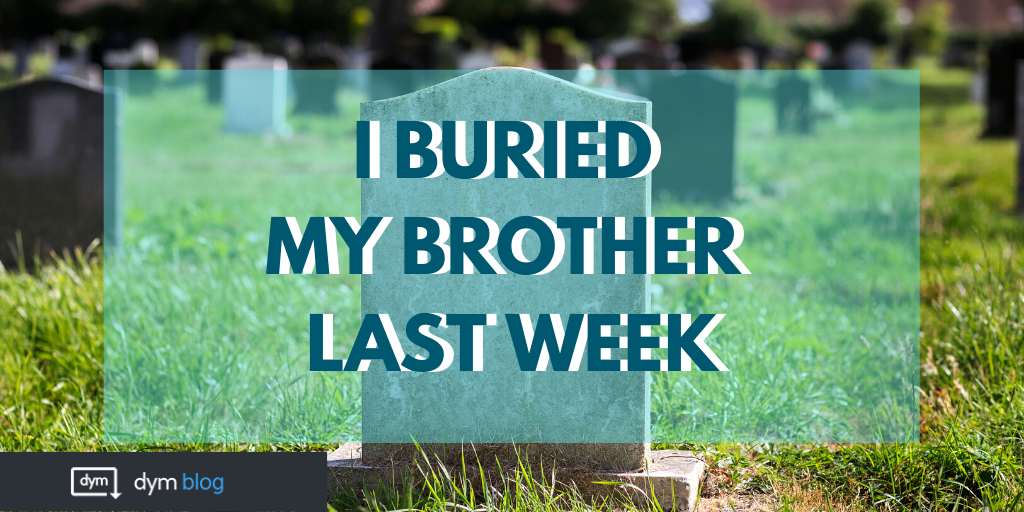
I Buried My Brother Last Week

By |2020-06-23T09:35:11-07:00June 23rd, 2020|Leadership|0 Comments

I know everyone is having a tough time right now. What with race relations being on the forefront of everyone’s mind, the decision on whether or not to meet during a national pandemic, and managing budgets during an economic meltdown, it’s a high-stress season for anyone.

Add to that list for me a family death.

I tell people if a youth pastor gets asked to do a funeral, it’s either a very sad occasion where a student passed away or the pastor was out of town for the occasion.

This last week was sad, but not because a student passed. I had to perform the funeral of my older brother.

It was unexpected and very sad. I found myself having a hard time properly grieving because I was also filling the role of pastor to my family. I had really good but emotionally draining talks with my cousins, my brother, my mom, my wife, and many others who were close to my brother and grieving his passing.

During the week, I knew I had to take care of myself as well as my family. If you ever find yourself in a situation where you are trying to pastor not just your congregation but your family, let me encourage you to take some steps to take care of yourself:

Move your body

I don’t know about your family, but when mine gathers together we typically sit and talk for hours on end. While that’s good for gathering, it’s not great on the hips (and the brain). Suggest taking a walk. Go throw a football in the back yard. Go to a store to help run an errand.

My wife and I actually found a gym close to my mom’s house that we’ve adopted as our gym away from home. It was really beneficial to get out and work out, for our sanity and for our bodies.

Eat good food

My mom is from the south, so food is a really important way to show love. And my mom was shown A LOT of love by her church. There was enough food brought over to her house to feed an army. And not all of it was the healthiest of choices. If you’re like me, food can be both a comfort and a crutch. Eat the veggies people bring you. Make healthy snack choices. And, even if it means your cousins look at you strangely, cook some food for yourself that’s healthier than a four-cheese lasagna.

Speak Truth

If you’re the pastor of your family, you’re probably going to be asked to fill those roles you would in a normal funeral situation: to pray when family gathers, to read scripture at the graveside, to bring the funeral message. That was certainly the case for me. One of my college professors told me whenever you preach a funeral, preach the Gospel. I’ve taken that to heart. Just because it was my brother’s funeral, it didn’t mean I was “off the hook.” I spoke truth whenever I was given the chance to speak. Do the same.

Grieve

This is the one I’m working on. As I write this, I’m traveling back home. To normal church life, normal family time, and normal routine. But I’m also going to take a moment to grieve my older brother. I don’t have to be strong for anyone else at the moment. I’m going to remember him and cry and pray and grieve.

Make sure you FEEL in your time of family loss. Don’t JUST be the strong one. Process. Cry. Grieve.

Request Time Off

If you’re the one running things when you’re at the family funeral, consider asking your supervisor for more time off once you return. You’re practically “working” if you’re planning the funeral and delivering the message. Ask for another day off or three so you can actually rest when you return home.

My family funeral folder is growing too large. I’ve preached my grandmother’s, grandfather’s, dad’s, and now my brother’s funerals.

I don’t enjoy being used to family funerals. But as a pastor, it’s the role that I accepted along with weddings and baby dedications and counseling sessions.

I pray that if you have to be the pastor at a family death, you’ll honor God and take care of yourself.

19 Jun 2020

Counseling During Those Awkward Times

By |2020-06-19T13:55:01-07:00June 19th, 2020|Leadership|0 Comments

I can bet the majority of you who have worked in ministry long enough have had your fair share of awkward conversations; not only with students in your ministry but parents as well. Personally, I will never forget the time that I was asked by a family in my ministry to sit in on a meeting with their daughter who wanted to confess something. No one had any idea what she was going to confess, but for everyone’s comfort level they wanted a pastor present and I just happened to be theirs.

Sitting in a room with awkward silence, not knowing what to expect wasn’t the hard part. Once she began to speak it was like a rocket being shot off, with a blast of emotion and the truth bursting forth. “Mom and dad, I lost my virginity last summer.”

Yes, this is awkward but I can handle this, this isn’t the first time and unfortunately won’t be the last time I hear this out of a teenager’s mouth in my ministry. It’s what came next that I couldn’t ever be prepared for. The parents, obviously in shock and with a look of disappointment asked their daughter who this boy was so they could know what boundaries to put into place and how to move forward. Her response was a name I had never heard before; which instantly put my mind at ease. (Thankfully not another Student in our ministry!) However, I will never forget the pure shock and disbelief that fell over the parents’ faces.

I tell you this story not because I handled it well but to tell you that you’re not alone. Sometimes we don’t know what to say, sometimes we know nothing we say will actually help. It’s in those times of ‘counseling in the awkward’, that maybe just our presence is enough. In this particular case, both parents looked at me, looked at each other, and looked at their daughter over and over again trying to find the right words to say. Instead of anything profound, I simply said,

“I’m here and I’m not going anywhere until you need me to.”

I was simply present in their time of shock and disbelief. I was present and silent. I didn’t make a joke to try and lighten the mood, and I didn’t point to scripture in the moment, I was simply there. Silently praying over them.

I think we often try and overthink things in times like this, trying to instantly fix the situation. In all reality this problem that was dropped in our laps that Sunday afternoon will need to be dealt with and handled with grace and care. The unveiling of this secret sin that their daughter had been carrying around for months will not be healed or fixed in moments. One of the best things I have learned over my time in ministry is that it’s ok if I don’t know the answer in the moment. It’s ok if I’m speechless in the immediate situation. My end goal will always be to support and work hard to find the right answers even if it means getting the family in front of a better person for them in their time of need. My job is not to solve their problems, it’s to never give up until there is reconciliation, until a plan is in place and until questions are answered in a biblical way. 

So in those awkward crazy times, just be. Be present, be consistent and be Christ to that family that needs you more now than ever before.

Blake Gunter is the Student Pastor at the Refinery Church in Buckeye Arizona. He and his wife Taryn have three kids.

15 Jun 2020

Racism: How We Got Here, And What’s Next

By |2020-06-15T13:54:39-07:00June 15th, 2020|Leadership|0 Comments

Within the tipping point of racism and protests, has it occurred to you how we’ve unconsciously taught about this in Christian circles for years?

How often have we shared that the Jews were under the harsh thumb of the Egyptians for four centuries, but it didn’t begin with tension? Joseph, the Jewish teenager turned Egyptian leader, saved the known world. Unfortunately, Exodus 1:8 cites that “eventually, a new king came to power in Egypt who knew nothing about Joseph or what he had done.”

Then consider how America was founded in 1776 and has only been around two-and-a-half centuries. That means the United States is collectively younger than the four hundred years the Jews were persecuted. Let that sink in.

Our student ministry recently pivoted to devote a night to exploring this, from students who feel the tension first-hand to others who don’t necessarily feel racist but know they could be doing more.

I’ve been pondering all of that, noting trends between the Old Testament Exodus and the recent riots. How did we get here, and what might be next?

  • Civilization: A group of people begin living with or near others for the purpose of overcoming an obstacle (like Joseph’s era) or establishing a society (like America).
  • Categorization: People begin consciously or unconsciously regarding each other. It can be controversial, like “They’re savages, but we’re civilized.” Or it can be constructive, like how early American immigrants clung to others within their unique culture to find work.
  • Domination: One group of people purposefully or circumstantially assert themselves over the other(s). Some do it for territory, like gangs in early New York fighting for local power. Others are suppressive, like making certain people slaves or lower-level workers. Many dominate circumstantially by having access to better food, clothing or housing. Sometimes, extreme domination happens when a “Pharoah” assumes leadership and fosters unchecked violence.
  • Starvation: Be it literal or figurative, one people group begin shrinking from a lack of sustenance. They try to make food out of whatever scraps are offered as those who have more make comfortable donations versus deeper sacrifices.
  • Frustration: When nothing changes, everything changes. Language about “them” versus “us” is fostered. Everyday conversation tastes like blood from everyone biting their tongues. Pain seeds a pregnancy of hope, but without a healthy “womb” it creates “stillborn deliveries.” That is, until a “surrogate womb” appears.
  • Confrontation: Those who felt like giving up begin rising up. Perhaps an injustice occurs, launching people out of social/literal quarantine into action. Because it’s so massive externally, spectators must evaluate themselves internally. As Martin Luther King stated, a riot is the language of the unheard.
  • Representation: Anyone who hasn’t felt seen or heard will demand it. Some will wonder why one people group “all of sudden” matters more than another, overlooking the irony of that sentiment.
  • Conversation: People finally sit down so they better know how to stand up. Those who were content not being a negative extreme evaluate if they’ve been apathetic. The mute find their voice. The blurry-eyed put on glasses. One generation brings up the topic to the other, from any direction.
  • Recalibration: Something intentionally changes. How lasting that change is correlates to how deep we let it begin in us.
  • Contemplation: With greater eyes, we grow greater hearts. We look forward to heaven’s ultimate reset, while bringing that kingdom on earth as it is in heaven.

My sons grew up with best friends whose skin color was different than theirs. I liked how it never came up in the friendship, because they simply were a couple of guys in our neighborhood who were the same age and loved the same Jesus we did.

And yet I was challenged when listening to Dr Bernice A King in an interview with Jimmy Fallon share how her father, Dr Martin Luther King, didn’t advocate for a “color-blind” America but that there’s a beauty in seeing a person’s race and culture in its entirety. I wonder what else I’m missing.

One thing is clear. “All of this has happened before, and it will all happen again.”

That is, unless our eyes been opened. And we do something about it.

And it’s rooted in rallying this generation to a Savior named Jesus, who calls us His Body.

***

Tony Myles is a real guy on a real journey following a very real God. A national speaker and author of more than a dozen books, his latest release “If… What If?” was co-written with his son to help students and parents journey through the Bible and life together.

Tony’s served as a senior pastor, staff pastor, ministry mentor and church consultant. He oversees and leads the multi-site student ministry of Riverside Church in Big Lake, Minnesota where he regularly invests into leaders, families, and teenagers.

Tony and his bride Katie have been honeymooning for more than 25 years and have three kids from elementary age to college. If it’s a really good day, you’ll find him sipping on a fruit smoothie while playing video games with his family.

Go to Top