Home/Posts/Youth Ministry Ideas
4 Mar 2025

10 Keys to Effective Middle School Ministry

By |2025-02-19T11:59:57-08:00March 4th, 2025|Youth Ministry Ideas|1 Comment

1) Don’t Try to Be One of Them

There’s a big difference between relating to middle schoolers and trying to be one of them. Deep down, they don’t want you to be their peer—they need a shepherd to guide them. Relating to them means understanding the season of life they’re in and compassionately pointing them to Jesus.

2) Don’t Expect Them to Be What They’re Not

Middle schoolers are still growing. Too often, I hear adults complain that they’re annoying or frustrating. Yes, we should hold them accountable if they’re acting like a 4th or 5th grader, but we can’t expect them to behave like high school juniors or seniors. That wouldn’t be fair. Set the bar appropriately high. When my son was five, I didn’t expect him to act like an eight-year-old, but I also didn’t let him act like a three-year-old.

3) Give Them Something to “Wear” at Home

Spiritual growth shouldn’t stop when they leave youth group. Their parents are the most significant influence in their lives. As youth leaders, our job is to partner with parents, equipping them to reinforce faith at home.

4) Encourage, Encourage, Encourage!

Don’t focus only on their shortcomings. If a student has five A’s and one C, celebrate the A’s instead of harping on the C. Encouragement builds confidence and helps students grow. Proverbs 18:21 reminds us that our words have the power of life and death—use them wisely.

5) Inside vs. Outside Ministry

If you truly want to reach a student’s heart, prioritize connections outside of youth group. The best way to influence a middle schooler is by letting them see your life as you follow Jesus. How do you treat your family? How do you handle everyday challenges? Discipleship is more caught than taught. I remember many things about my youth pastor, but what stood out the most was the way he treated our waitress.

6) Talk to Parents

This can feel intimidating, especially if you’re young, but it’s crucial. Tell parents how much you love their kids and that you’re praying for them. Parents appreciate resources—provide as many free ones as you can. Many parents want help but don’t know how to ask for it (or even realize they need it). If you plan a parent meeting, make sure you’re offering something they can’t get from an email—respect their time.

7) Give Middle Schoolers Responsibilities

They may surprise you—they actually want responsibility! Help them transition from being consumers to owners in the church. We are most like Jesus when we serve. When students get involved, they stop seeing church as something they attend and start seeing it as something they belong to.

8) Be Intentional About What You Teach

If you can clearly communicate with a middle schooler, you’re probably one of the best communicators in your church. But too many youth workers wing their messages instead of preparing them well. Write it out, practice it, and don’t just rely on charisma. If you wing it, you’re not preaching—you’re performing.

9) Think Long-Term

Your time with these students is temporary, but their faith journey continues beyond your program. You might not see the final product, but your faithfulness now matters. Plant seeds and trust God with the growth. Remind your leadership team of this often—they need to see the big picture, too.

10) Spend Time with the Father

If you’re not spending time with God, you’ll have nothing to give your students. The most important thing you can offer them is an authentic relationship with Jesus. When your own faith is strong, your middle school ministry will thrive.

*Guest Post by Tim Wadsworth

3 Mar 2025

How to Help Your New Sixth Graders… While They’re Still Fifth Graders

By |2025-02-19T12:17:54-08:00March 3rd, 2025|Youth Ministry Ideas|3 Comments

The first time a brand-new sixth grader walks into youth group, you can tell within seconds whether they feel ready or overwhelmed. Some walk in with confidence, already familiar with the rhythms of your ministry. Others look like they just wandered into a foreign country where they don’t speak the language. The difference? Preparation.

Too often, youth ministries wait until students have already moved up before trying to connect with them. But if you want your new sixth graders to feel like they belong, the best time to start helping them isn’t when they arrive—it’s while they’re still in fifth grade.

Build Bridges Before They Cross Them

Fifth graders aren’t just “future youth group kids.” They’re students who are already forming opinions about church, relationships, and faith. The more you invest in them now, the more likely they are to stay engaged when they move up. That investment starts with presence. Show up at kids ministry events, introduce yourself to students, and make sure they know your face before they ever step into youth group. A simple, “Hey, I’m your future youth pastor! Can’t wait for you to join us!” can go a long way.

Create a Familiar First Step

Moving up to youth group feels like a big leap, but you can make it feel like a natural next step. Consider hosting a special event just for fifth graders—a preview night where they experience youth group in a low-pressure environment. Let them meet some of your student leaders, play a few games, and hear from older students about what to expect. The goal isn’t to wow them with the biggest, craziest event ever. It’s to make youth group feel like a place where they already belong.

Get Their Parents on Board

Here’s a secret: most fifth graders aren’t making their own church schedule—their parents are. If parents are unsure about youth group, hesitant about the transition, or just don’t know what to expect, it’s going to be harder for their kids to engage. That’s why you need to win parents over before their students move up. Host a parent meeting, send out a welcome packet, or even just take time to introduce yourself. When parents feel comfortable, their kids will too.

Make Space for Their Questions

Fifth graders have a lot of questions about youth group, even if they don’t say them out loud. Will I know anyone? Is it scary? What if I don’t understand the lesson? Am I allowed to bring my stuffed animal? (Yes, that’s a real question a fifth grader once asked.) Instead of letting those questions create anxiety, give them space to ask. Whether it’s a Q&A session at a kids ministry event or a casual conversation after church, helping them process the transition will ease their nerves and help them feel more prepared.

Don’t Just Welcome Them—Pursue Them

When students officially move up, don’t assume they’ll immediately feel at home. Even with all the preparation in the world, some will still hesitate. That’s where intentional follow-up matters. A quick text, a handwritten card, or even a “Hey, I’m glad you’re here!” on their first night can make a world of difference. Let them know they’re not just part of youth group because they aged in—they’re part of youth group because they belong.

The transition to youth ministry isn’t just a moment; it’s a process. When you start investing in your future sixth graders while they’re still in fifth grade, you’re not just making youth group easier for them—you’re setting them up for long-term engagement in your ministry. And when that first youth group night finally comes, they won’t just be walking into a new space. They’ll be walking into a place that already feels like home.

27 Feb 2025

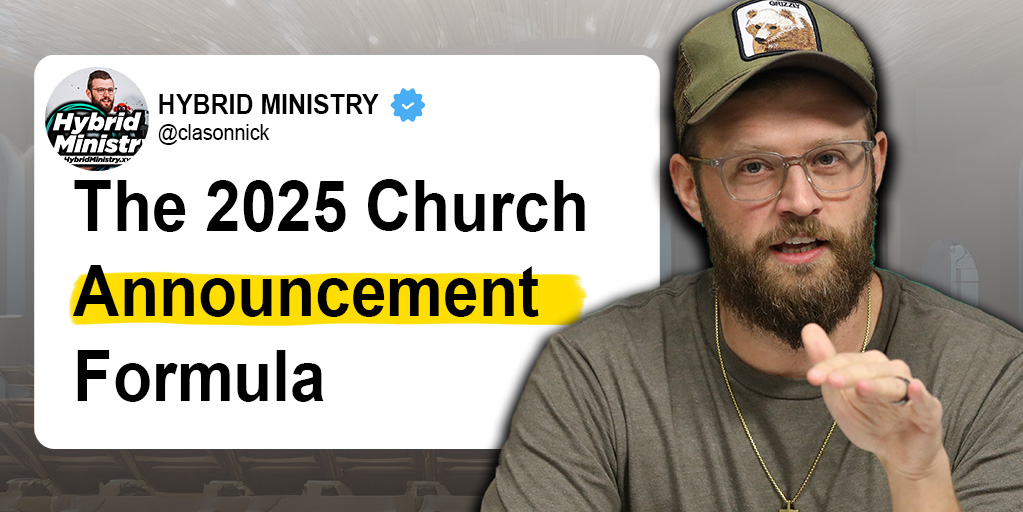
Steal this Clearer (& Less Boring) Church Announcement Strategy

By |2025-01-28T05:53:02-08:00February 27th, 2025|communication, Help Me With..., Hybrid Ministry, online youth group, Podcast, Technology, Youth Ministry Ideas|0 Comments

Tired of your church announcements being ignored?

In this episode of the Hybrid Ministry Podcast, we’ll show you how to create clearer and less boring announcements using three practical hacks:

  • reduce your CTAs,
  • centralize next steps,
  • and inspire over inform.

Stop overwhelming your audience with noise—learn how to simplify your messaging, engage your community, and make your announcements impossible to miss.

And if you’re interested in seeing more of what the Hybrid Ministry Show has to offer, I’d love to encourage you to check out more!

25 Feb 2025

By |2025-02-19T12:06:51-08:00February 25th, 2025|Youth Ministry Ideas|3 Comments

In October 2024, my life came to a screeching halt. After 20 years in youth ministry, I was asked to take a break. This wasn’t a sabbatical or a time of refreshment—it was a forced pause, a moment where leadership had to step in and say: It’s time for you to step away from ministry.

I want to be clear: this wasn’t the result of some hidden sin or moral failure. It wasn’t about misconduct or breaking trust. It was because I was a broken man trying to carry everything on my own. And I’ll be honest with you—I did it well for a lot of years, but your struggles have a funny way of catching up to you.

When the news hit, I cycled through a storm of emotions. First, I was salty—frustrated and defensive. Then, I went numb, unsure of what to do with myself. And beneath it all, I was afraid. Afraid of looking like a failure. After all, this is all I’ve ever known. Ministry has been my life’s work. If I wasn’t leading, then who was I? Just a broken guy who realized that life is way too hard.

We all know the truth: life is hard. Ministry is hard. The Bible never promises an easy road—quite the opposite. Consider these verses:

“We are hard-pressed on every side…” (2 Corinthians 4:8-9)

“You will face trials of many kinds…” (James 1:2-4)

These verses aren’t just poetic encouragements; they are raw reminders of reality. Life brings trials. Leadership carries weight. And if we’re honest, many of us are carrying far more than we should on our own.

Not only do we bear our own struggles—our past wounds, anxieties, traumas, and insecurities—but in ministry, we also carry the burdens of those we serve. Over the years, I’ve walked with students through everything under the sun: suicides, deaths, illnesses, broken homes, abuse, addiction, mental health crises, faith deconstruction—you name it, I’ve seen it. And while I was there for them, I never stopped to acknowledge my own wounds.

I grew up in a deeply dysfunctional home before being adopted. Before the age of five, I was bounced through 30 foster homes. Abuse and neglect were constants in my early life, and in response, I became a relentless people-pleaser—desperate to be accepted, valued, and needed. I learned to hustle for my worth, and that same pattern followed me into ministry. I poured myself out for others but never allowed myself to be cared for because I was afraid to reveal my cards. What would people think of me?

The weight of leadership, the expectation to always be available, the constant outpouring—it all takes a toll. For years, I prided myself on my ability to push through. Late nights, early mornings, hard conversations, big events, deep heartbreak—it was just part of the job. And I was okay with that—until I wasn’t.

Eventually, my wife saw what I refused to. When I was too prideful to ask for help, she did it for me. And when I was told to take a break, I didn’t know how to react.

For weeks, I sat in that feeling of failure, convinced I was alone. It reminded me of the psalmist’s words in Psalm 102:

“For my days pass away like smoke, and my bones burn like a furnace. My heart is struck down like grass and has withered; I forget to eat my bread. Because of my loud groaning my bones cling to my flesh. I am like a desert owl of the wilderness, like an owl of the waste places; I lie awake; I am like a lonely sparrow on the housetop…” (Psalm 102:3-7)

But something unexpected happened in the silence. As the noise of ministry faded, I began to hear God’s voice in a way I hadn’t in years.

I saw how exhausted I truly was. I realized my identity had become wrapped up in my role. I recognized how I had neglected my own soul.

For so long, I had been focused on shepherding others, yet I had ignored the broken places in my own heart that desperately needed tending.

This unwanted breakthrough became a gift. It reminded me that ministry is not about me. God’s work doesn’t depend solely on my effort. My worth is not in how much I do, but in whose I am. So I humbled myself, surrendered, and took the opportunity to grow.

  • I asked for help and invited mentors to walk with me in my pain.
  • I submitted myself to leadership with full awareness that not dealing with my issues could cost me my job.
  • I sat through weekly intensive counseling sessions and poured out my pain.
  • I wept uncontrollably and became okay with wearing my heart on my sleeve.
  • I apologized to my family, my youth staff, and my students for my pride.

All I could do was cast my burden on the Lord, and that’s when the fog started to lift and healing began. It wasn’t instant, and it wasn’t easy, but day by day, I felt His presence guiding me through the pain. The weight that once felt unbearable slowly became lighter, replaced by a deep sense of peace that only He could provide.

The truth is, I will continue to deal with my past, my pain, and my wounds. Even as a new creation in Christ, those things remain a part of my story. I think this is why both Paul and Peter said:

“…cast all your anxieties on Him because He cares for you.” (1 Peter 5:7)

“…press on toward the goal for the prize of the upward call of God in Christ Jesus.” (Philippians 3:14)

Both apostles understood that following Jesus doesn’t erase our past, but it does redefine it. Paul, who once persecuted Christians, didn’t ignore his history—he acknowledged it as a testament to God’s grace. Peter, who denied Jesus three times, didn’t let his failure define him—he allowed Christ’s restoration to shape his future.

In the same way, I am learning that my past is not something to be ashamed of or something to run from. Instead, it is a part of my testimony, a reminder of where I’ve been and how far God has brought me. My wounds don’t disqualify me; they position me to experience and extend God’s healing to others.

This is the beauty of redemption. Jesus doesn’t just save us from our sin—He transforms our pain into purpose. My past struggles, failures, and hurts are not obstacles to my faith; they are the very places where God’s grace shines the brightest.

So, I will continue to walk forward, acknowledging my wounds but refusing to be defined by them. I will keep surrendering them to Christ, trusting that He is making all things new—including me.

If you’re reading this and feeling the weight of ministry, I want to encourage you: slow down. Take inventory of your soul. Don’t wait until you’re forced to stop—pause now. Let yourself rest. You are not God. You are not the Savior. You are simply a vessel He has chosen to use, and He cares more about your heart than your hustle.

To my fellow youth workers, pastors, and leaders—don’t wait until burnout takes you out. Your soul matters. And so does your story.

P.S. I’m back at work because I did the hard work… You can too!

Guest post from:

Jonathan Kornelsen

24 Feb 2025

What Every Kids Pastor Wishes the Youth Pastor Knew

By |2025-02-19T12:13:16-08:00February 24th, 2025|Youth Ministry Ideas|1 Comment

If you’ve been in youth ministry long enough, you’ve probably noticed a bit of a gap between youth pastors and kids pastors. It’s not always intentional, but let’s be honest—sometimes we’re so focused on middle school and high school students that we don’t give much thought to the ministry happening just down the hall.

But here’s the thing: kids ministry and youth ministry aren’t competing teams. We’re playing for the same Kingdom. And if we want to do our jobs well, we need to be on the same page. So, here are a few things every kids pastor wishes their youth pastor knew:

1. The Bridge from Kids Ministry to Youth Ministry Matters

You know those sixth graders who show up looking lost and overwhelmed? That transition didn’t start in August—it started years ago. Kids pastors spend years pouring into those students, building relationships with their families, and preparing them for what’s next. When youth pastors partner with kids pastors, the transition is smoother, and students are more likely to stay engaged.

What you can do:

  • Show up to a kids ministry event and connect with fifth graders before they move up.
  • Collaborate on a transition plan so students don’t feel like they’re starting from scratch.
  • Celebrate milestones together (like a “moving up” ceremony).

2. Parents Trust the Kids Pastor—Leverage That

In kids ministry, parents are highly involved. They know the kids pastor well, and that trust doesn’t automatically transfer to the youth pastor. If a kids pastor speaks highly of the youth ministry, parents are more likely to buy in. If there’s no connection, some parents may disengage as their kids grow older.

What you can do:

  • Get to know key parents in kids ministry before their students move up.
  • Ask the kids pastor to introduce you to families.
  • Communicate your ministry vision clearly so parents know what to expect.

3. What You Inherit is What Was Built in Kids Ministry

Those students who show up to youth group ready to lead, serve, and grow in their faith? That didn’t happen overnight. That’s the fruit of years of investment in kids ministry. And the students who struggle with faith, discipline, or engagement? They have years of experiences that shaped them, too.

What you can do:

  • Recognize and build on the foundation that’s already been laid.
  • Don’t just focus on what’s lacking—celebrate the spiritual growth that’s already happened.
  • Be aware of kids who struggled in elementary ministry and look for ways to help them thrive in youth ministry.

4. Kids Pastors Want to Be Respected as Ministry Leaders

Youth pastors sometimes assume that kids ministry is just about crafts and Goldfish crackers. But kids pastors are doing deep discipleship work. They’re not just babysitting—they’re laying the spiritual groundwork that will carry students through their teenage years and beyond.

What you can do:

  • Acknowledge the spiritual depth of kids ministry.
  • Ask for advice—kids pastors have been working with these students for years.
  • Don’t just talk about what you’re doing in youth ministry; take an interest in what’s happening in kids ministry, too.

5. Discipleship Starts Long Before Middle School

Too often, youth pastors act as if middle school is the “real” starting point for faith development. But the reality is that many students decide what they believe about God before they ever step into youth group. Kids pastors are doing the work of discipleship long before youth pastors get a chance.

What you can do:

  • Align teaching themes so kids and youth ministries reinforce each other.
  • Encourage younger students to serve and lead in kids ministry before they enter youth group.
  • Value the work that’s happening in kids ministry, knowing it directly impacts the students you’ll eventually disciple.

Final Thought

Youth pastors, your kids pastor isn’t just a coworker—they’re your biggest ally. When you build a strong partnership, you’re setting students up for long-term spiritual growth. So, take them to coffee, ask them what they wish you knew, and start working together to make that transition the best it can be.

Because at the end of the day, it’s not about youth ministry or kids ministry—it’s about building lifelong disciples.

20 Feb 2025

3 Reasons Your Announcements Aren’t Working

By |2025-01-21T05:39:17-08:00February 20th, 2025|communication, Help Me With..., Hybrid Ministry, online youth group, Podcast, Technology, Youth Ministry Ideas|0 Comments

Ever feel like no one’s listening to your church announcements?

In this episode of the Hybrid Ministry Show, I will dive into the common pitfalls of church announcements, revealing three reasons why they’re not working—and offering actionable solutions to fix them.

From battling “inattentional blindness” to cutting through the noise of a digital world, this episode will help you craft announcements that inspire life transformation, not just attendance.

Let’s start making better church announcements!

And if you’re interested in seeing more of what the Hybrid Ministry Show has to offer, I’d love to encourage you to check out more!

13 Feb 2025

More than a Shoebox

By |2025-02-13T14:28:24-08:00February 13th, 2025|Youth Ministry Ideas|3 Comments

Vacation Bible School is always so much fun! My church always had lights, plenty of food, dancing, and songs. And throughout the six-day event, the gospel was shared. It’s not much different in Peru.

Today, Josh and I headed out for The Greatest Journey event. This is the real “meat and potatoes” of Operation Christmas Child.

We walked into a church that had received its shoeboxes a week prior, and they were having what we know as Vacation Bible School! Costumes, dancing, and lessons were all part of it. They call it The Greatest Journey (TGJ)!

The TGJ curriculum is provided by Samaritan’s Purse and is taught to the kids over 12 days.

Passing out the shoeboxes is special for everyone, but the churches in Peru have stepped up, turning it into two incredible weeks of lessons and VBS for the kids.

As we stood in the back, towering over the children, we saw a beautiful picture—kids learning the gospel the same way our own children do, complete with a snack. Because what is kids’ ministry without a snack, right?!

As a youth pastor, it made me proud to see the local teenagers stepping up with joy to teach the next generation what it means to be a follower of Christ.

When the kids complete the program, they are gifted a Bible. The number of lives touched through the gift of God’s Word is beyond measure.

The toys will fade, but the Word of God lasts forever.

It’s more than a shoebox.

*Guest post by Chris Thomas

13 Feb 2025

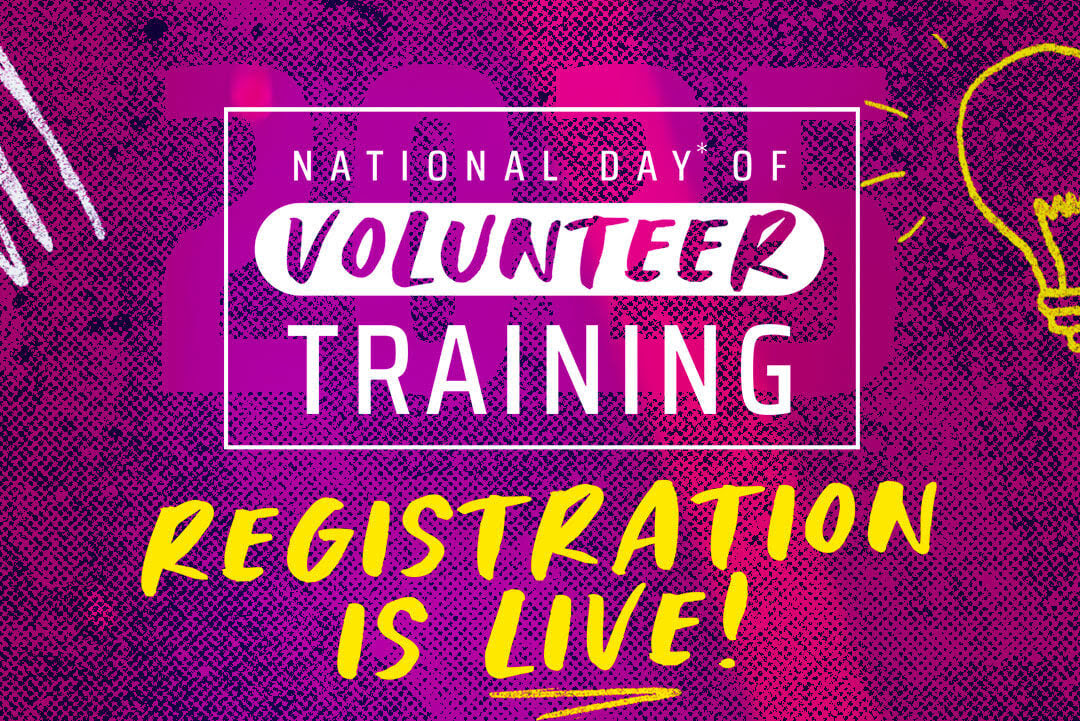
WATCH: The National Day of Volunteer Training full-length download!

By |2025-02-13T14:25:30-08:00February 13th, 2025|Youth Ministry Ideas|0 Comments

ndo_announcementemail_01-1

National Day of Volunteer Training is a 3-hour, video-driven, fun, and momentum-building event, with practical youth ministry training for your volunteers. It’s packed with energy, discussion time, and fun-filled “we get you” memorable moments!


Train your team whenever you want, however works best for you! We’ll provide everything you need to put on an engaging and fun training event!

1. Purchase the training—one price covers your whole team!
2. Receive the 3-hour National Day program on August 1, 2025.
3. Pick a date and time to host your training.
4. Invite your youth ministry volunteers.
5. Press ‘play’ and grow together this Fall.
6. Launch the new school year with equipped and encouraged leaders!

whatsincluded-Feb-12-2025-10-45-48-5615-PM

This video training resource will be delivered on August 1st, 2025 and includes:

  • Complete 3-hour National Day program made up of:
    • 6 TED Talk-style trainings
    • Discussion videos for each session
    • Lots of fun sprinkled throughout
  • Robust Attendee Guide
  • Complete Event Guide
  • Promotional & Social Media Graphics
  • BRAND NEW THIS YEAR: Hosting License
    • Every purchase includes a hosting license—invite other groups to join!
  • And so much more!

You get this all for your entire team, for one low price!

Lock in your training today.


kidsndo

New this year, NDOVT Kids!

Top-quality training designed just for KidsMin volunteers—taught by trusted KidMin veterans and thought leaders.


Tell your Kids Pastor! Bundle and save $150 when you purchase both trainings.

Have questions?

We’d love to connect with you and answer any questions you have. Email [email protected] to talk to one of our team members about bringing the National Day to your church!

13 Feb 2025

Six Months In: What I’ve Learned Leading VPYouth

By |2025-02-13T05:37:31-08:00February 13th, 2025|Youth Ministry Ideas|2 Comments

This month marks six months since stepping into the role of youth pastor at VPYouth at VantagePoint Church. As I sit here and reflect, I realize what a whirlwind it has been—taking over a ministry from a beloved youth pastor who is still on staff, inheriting a volunteer team, and stepping back into the trenches as the solo, only-staff youth pastor leading around 150 students.

And honestly? I’m incredibly thankful for what I get to do.

In the process, our student attendance and volunteer team have nearly doubled. But I’m not sharing that for attention—I’m sharing it as a personal reflection because I believe it’s just as important to recognize what is working as it is to pinpoint what isn’t. If you’re a new youth pastor stepping into a new church, or maybe you’ve been in one place for a while and feel stuck, here are some things our team has focused on in our first 150 days that I believe have made a real impact:

Dialing in Our Service

I won’t lie—when I first got here, I was worried about our midweek service. It lacked key elements, wasn’t very engaging, and students were disruptive. So we got to work. We focused on bringing fun back into the room, reshaping the culture around worship and respect, and fine-tuning our order of service to set students up for success in small groups.

Six months later, our services look completely different. The culture in the room has shifted. Students know what’s expected, small groups are thriving, and there’s an excitement that wasn’t there before. Spiritually? We’re still growing—but we’re getting there.

Focusing on Small Group Leaders

If small group leaders know how to win and feel equipped, everything changes.

When I stepped in, the small group structure wasn’t bad—our leaders just weren’t sure what “success” looked like. My role was to clarify expectations, train them, and help them lead with confidence. We focused on:

  • Defining clear “wins” for leaders
  • Giving them practical tools for leading students
  • Teaching them how to control the room while still fostering real connection

Now? Students aren’t just inviting their friends because service is great—they’re inviting them because small groups feel like real community.

Communicating Well with Parents

If you’ve ever been in the DYM Facebook Group, you’ve seen this question: “How do you communicate with parents?”

I don’t have a revolutionary answer. What we did was add every parent we could to our email list and committed to weekly updates. Each email includes:

  • A celebration story of what God is doing
  • A recap of the message with small group questions
  • A resource (once a month) for parents to use at home
  • Upcoming events and key dates

The number of parents who have emailed back saying “Thank you for keeping us in the loop” is crazy. They may not always respond—but they are reading. And that matters.

Being Super Present on the Weekends

Our church doesn’t have dedicated youth services on Sundays because of space limitations. But instead of letting that be a roadblock, I committed to being as present as possible in the church lobby.

Some weekends, I hang out and connect with students and parents. Other weekends, we set up a student table or I help host service, sharing stories of what God is doing in youth. The result? Students who only attended on weekends started showing up on Wednesdays.

Will this still be as effective a year from now? Maybe, maybe not. But as the new guy, being intentional about visibility has made a big difference.

Developing a Strong Leader Culture

When I arrived, almost all our volunteers were young adults. That’s not a bad thing—I love their energy (especially since I, a 38-year-old man, do not have the same level of energy anymore). But I knew we needed leaders of all ages and, more than that, we needed to build a true leadership community—not just people who happened to serve in the same space.

So we focused on:

  • Training leaders well so they felt confident in their role
  • Creating community within the team—because leaders who know and love each other lead better
  • Hosting spaces just for them—so they could encourage and sharpen one another

Now? Our leaders are our biggest recruiters. They’re inviting others because they don’t just love the students—they love being part of this team.

There’s more I could share, and maybe I’ll do a Part 2. But these are the things that have really stood out to me as the “new guy” stepping into an established ministry.

At the end of the day, the goal has been getting healthy. And when a ministry is healthy—it grows.

Would love to hear from others: If you’ve stepped into a new ministry role, what’s helped you build momentum?

You can check out our ministry @vpyouth on IG.

I also co-host the Youth Ministry Hacks Podcast where I dive into this more in detail. 


13 Feb 2025

9 Easy & FREE Youth Group Game Ideas

By |2025-01-18T14:17:27-08:00February 13th, 2025|communication, Games, Hybrid Ministry, Parents, Podcast, Technology, Youth Ministry Ideas|3 Comments

This is your ultimate “Oh Crap! I forgot the game” video!

Get all 9 of the games talked about in this video, from downloadyouthministry.com for COMPLETELY FREE!

All I ask for is a simple subscribe, it costs you nothing!

Ready to see my top 9 favorite games of all time?
Let’s check it out!

And if you’re interested in seeing more of what the Hybrid Ministry Show has to offer, I’d love to encourage you to check out more!

Go to Top